A whole life written down on doors
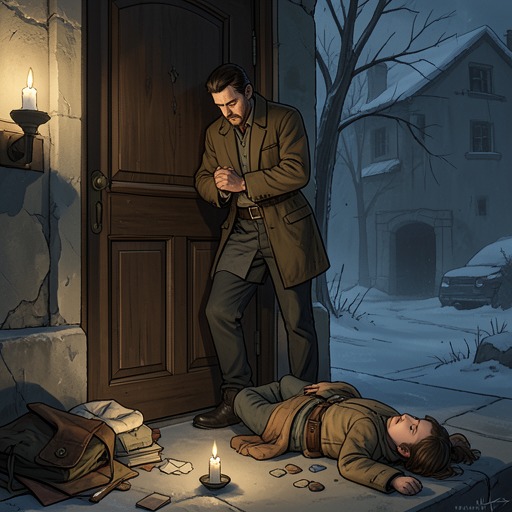
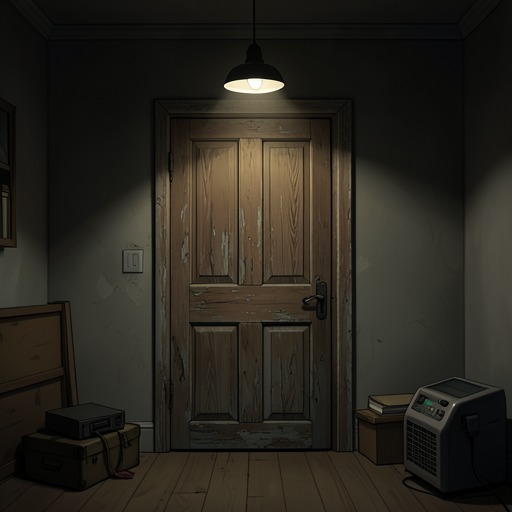
Voices from ChernobylA whole life written down on doors is the image at the center of Zinaida Yevdokimovna Kovalenko’s account of displacement: the door of her home bears the marks of her childhood and her children’s growth, and once held her father’s body after his death. By taking it from an abandoned apartment, she rescues more than an object. The door becomes a family record carried out of a place the family had been forced to leave, and a witness to a past that is difficult to put into words.
The Door as Family Record
The door’s meaning is intimate and specific. Kovalenko explains that, in her family’s tradition, a deceased person was laid on the door of the home until the coffin arrived. Her father had lain there, while she kept watch beside him through the night. The door therefore held both a childhood record and the memory of death: small etch-marks recorded her progress through school, and other marks showed how her son and daughter had grown. Its surface made family time visible, from her own first years to the next generation.
When radio announcements said that people could not take their cats, Kovalenko’s family tried to hide theirs in a suitcase; the cat climbed out and scratched those around it. The effort to take the door was another refusal to accept that departure meant leaving everything behind. Kovalenko could not take all her belongings, but she could not abandon the object that gathered her family’s history. She covered the entrance with boards, treating the door as a talisman and relic rather than an interchangeable part of the apartment.
Leaving and Returning for the Door
Kovalenko says the family left on the third day, as the reactor burned. She recalls a friend identifying the smell as coming from the reactor, and describes the loss not simply as losing a town but as losing their whole lives. Against that rupture, the door offered a concrete, portable link to the home they had left: its marks could not be replaced by a description of the past.
Two years later, after the apartment had been looted and emptied, she returned at night to retrieve it. A neighbor with a car gestured as if to suggest that she was not quite right, but she carried out her plan on a motorcycle, traveling through the woods with the door. Police pursued her and threatened to shoot, believing she was a thief. The return reversed the terms of the original loss: she was treated as a criminal for taking from her own home the object that most clearly belonged to her family. Her description of the act as stealing the door from her own home captures the dislocation in that reversal.
Testimony and the Chernobyl Person
The door’s physical marks answer a problem Kovalenko states directly: she is not a writer, and neither her ability to understand nor her education seems adequate to describe what happened. She distinguishes her own account from the public image of Chernobyl, which she says turned the place into a house of horrors and then into a cartoon. The door’s marks resist both simplifications. They are not an abstract emblem but evidence of ordinary years, family growth, bereavement, and forced departure.
Kovalenko also describes how an ordinary person became a Chernobyl person, singled out by others and treated as an object of curiosity. Questions about the disaster, fear, and whether survivors could have children made private loss into a public identity. In this setting, the door holds what that identity cannot contain: a particular family’s history before and after leaving home. The account opens with a desire to bear witness and with the admission that the event returns every day. The recovered door gives that testimony a material form—one that records a whole life even when the witness doubts that language can describe it.